DOCKADE / THE DESIGN TRAIL

An afternoon.
A lot of iterations.

I used AI to take the first Dockade concept from an idea to a set of designs in an afternoon. Then I kept asking what could change, what could shrink, and what could go.

This is that design trail: the early concepts, the detours, and the refinements that followed. Every version left something for the next one.

Original design archive. Early images use the working name Stratum.

3D renders and AI appearance studies, not photographs of built prototypes.

The decisions behind the dock.

Numbered versions, with the branches in between.
Some ideas came back. Others stayed in the archive.

  1. 01
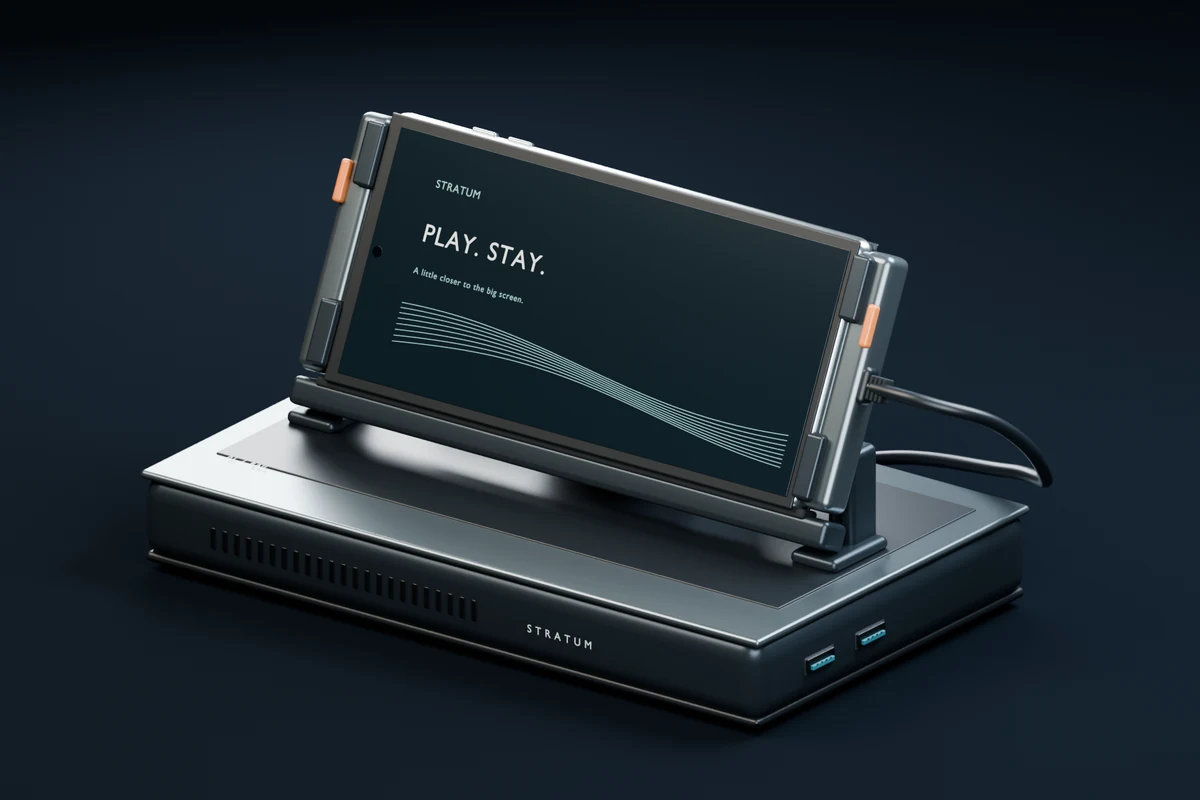
    Original Rail concept
    Original Rail concept3D model render

    V1

    First concept

    A small console for a phone.

    The starting point was a broad dark base, an upright phone and adjustable jaws. A soft thermal pad already connected the phone to a metal cooling assembly. It had the idea, but also a lot of hardware.

    Started with

    A 210 × 125 mm base, contact cooling and a 65° phone angle.
  2. 02
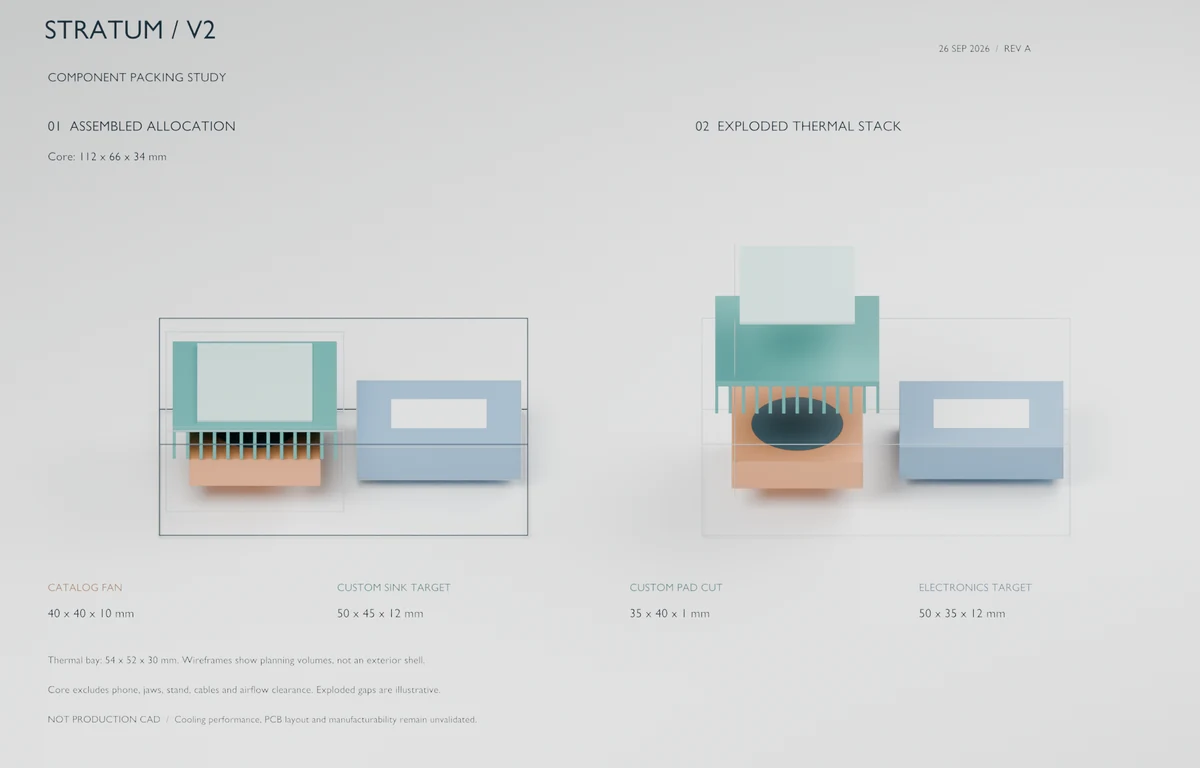
    Cooling and electronics packing study
    Cooling and electronics packing study3D model render

    V2

    Reduce the scope

    Start with the parts.

    Ethernet and the extra accessory ports came out. The next pass put the fan, heatsink, pad and HDMI/charging electronics into a compact packing study. The question became how little dock we actually needed.

    Changed

    A 112 × 66 × 34 mm core allocation, with cooling and electronics side by side.

  3. 03
    Saddle concept with an overhanging phone
    Saddle concept with an overhanging phone3D model render

    V3

    The Saddle

    Let the phone overhang.

    A deep cooling pod and a thinner electronics wing replaced the broad base. The phone sat at a shallow 12° angle; a flat alternative explored saving more shelf height. The small contact pad and flexible phone cable stayed.

    Changed

    A narrower 112 × 58 mm core; the body no longer followed the whole phone.

  4. 04
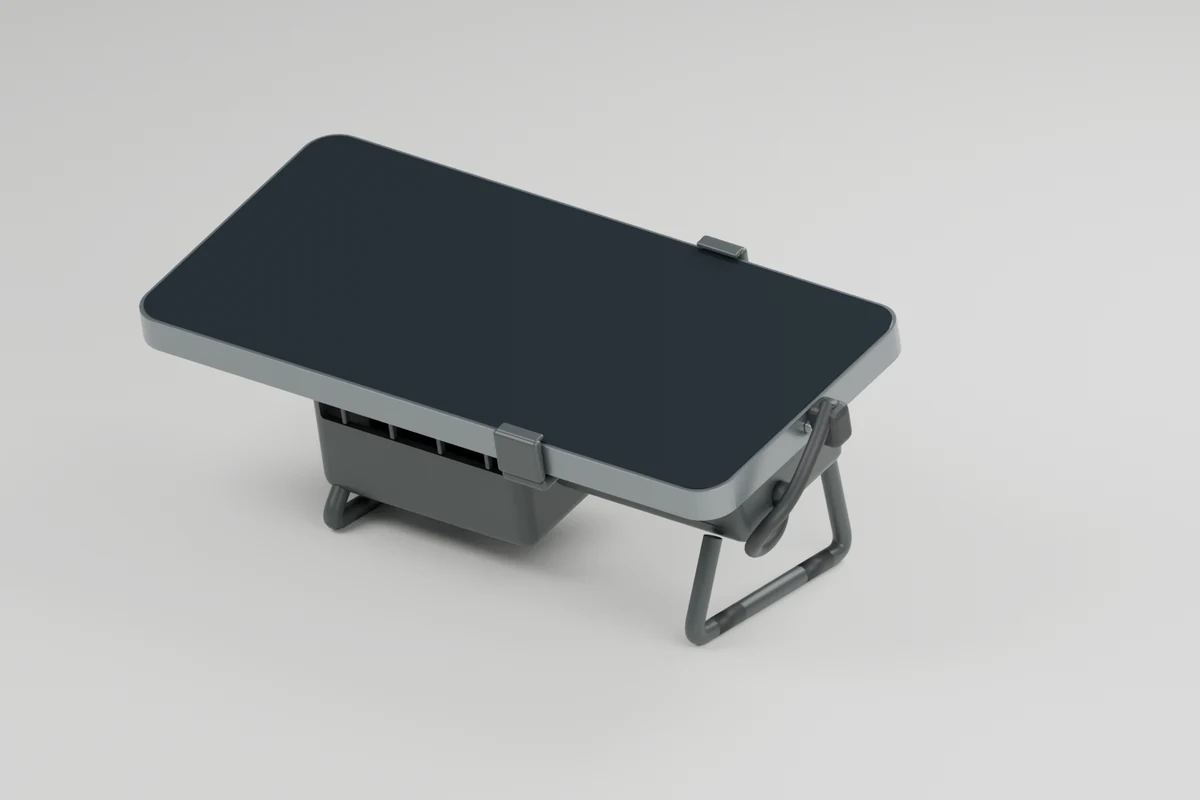
    Flat Deck with the larger contact plate exposed
    Flat Deck with the larger contact plate exposed3D model render

    V4

    The Deck

    Make the contact area bigger.

    The phone moved onto a flat deck with a much larger cooling plate shaped around the camera. That gave more surface to test, while raising new questions about even contact, gentle pressure and wireless performance.

    Changed

    The contact area grew from 14 to about 60 cm². More area was a test idea, not a cooling result.

  5. 05
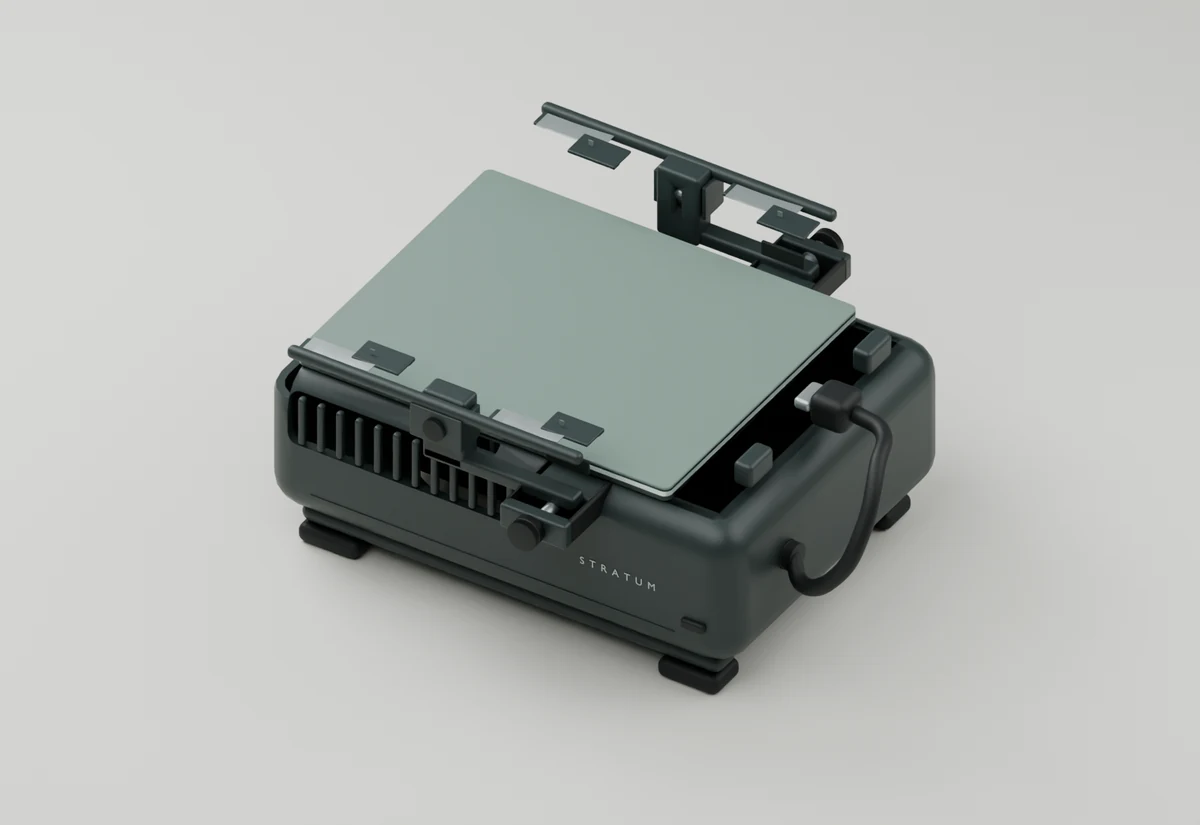
    Adjustable carriers and four hold-down shoes
    Adjustable carriers and four hold-down shoes3D model render

    V5

    Contact & retention

    Give the pressure its own adjustment.

    Four soft hold-down shoes replaced the fixed lips. Phone thickness and spring pressure could be adjusted separately, and interchangeable plates made different contact sizes easier to compare. The mechanism was becoming more testable—and visibly more complicated.

    Changed

    Adjustable side carriers, a simpler default plate and a removable cooling module.

  6. 06
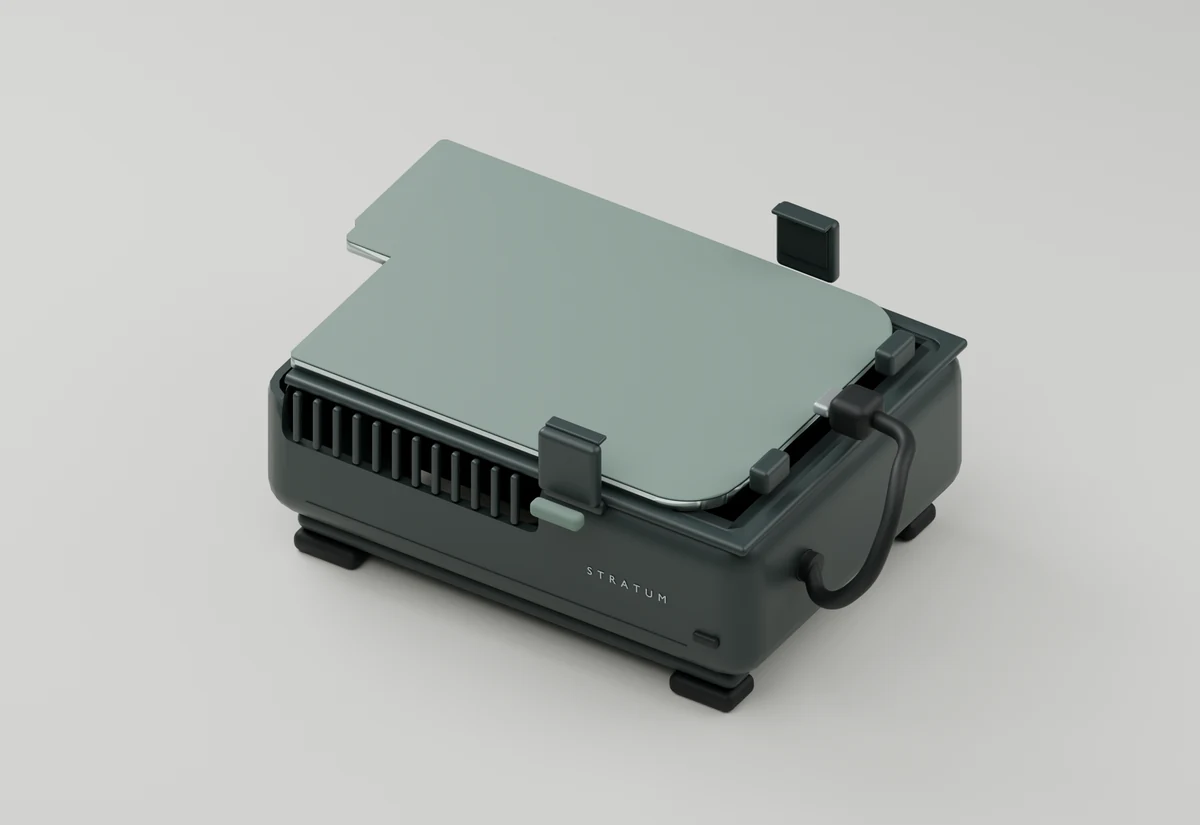
    Floating silver slab study
    Floating silver slab studyAI appearance study
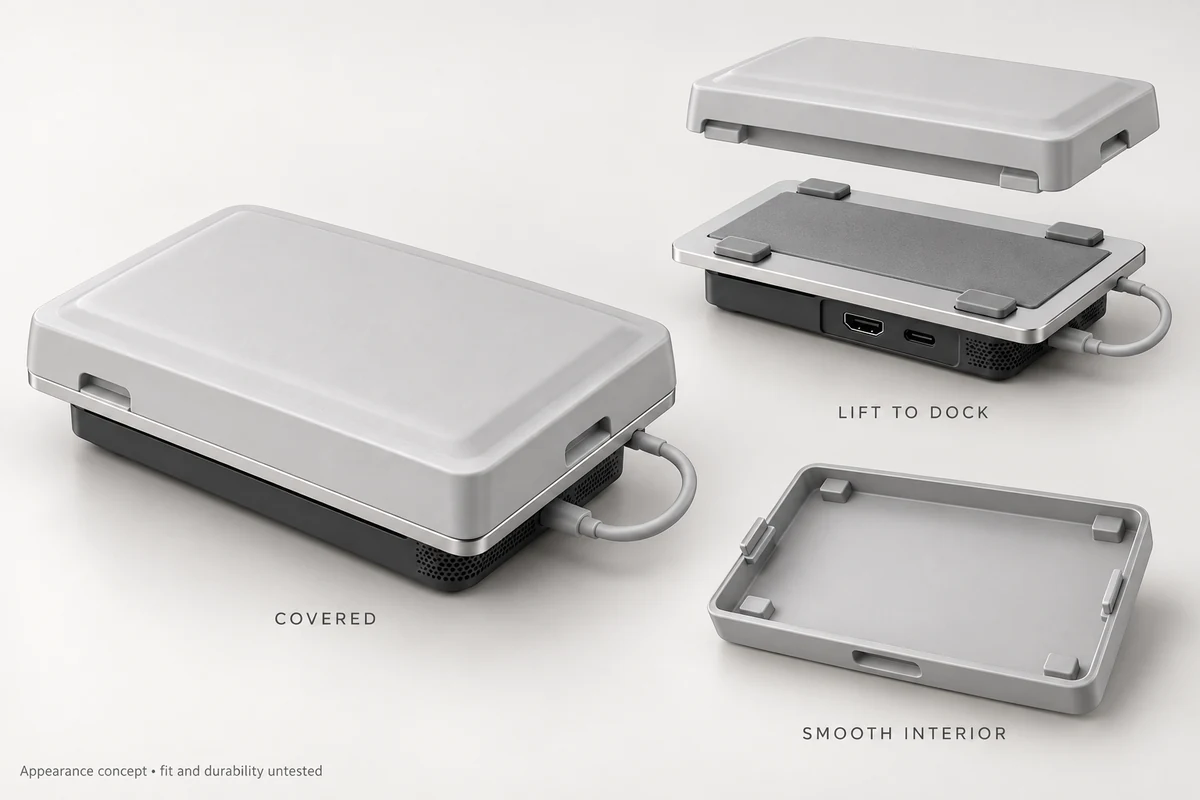
    Lift-off dust-cover study
    Lift-off dust-cover studyAI appearance study

    V6

    Appearance exploration

    Try a floating slab.

    A silver top and recessed dark body hid some of the visual weight. We also explored a lift-off cap to protect the exposed pad between sessions. The cleaner silhouette was appealing, but the hidden mechanism still needed to fit underneath it.

    Explored

    A new finish and protective cap. These were appearance studies, with the mechanical layout still to resolve.

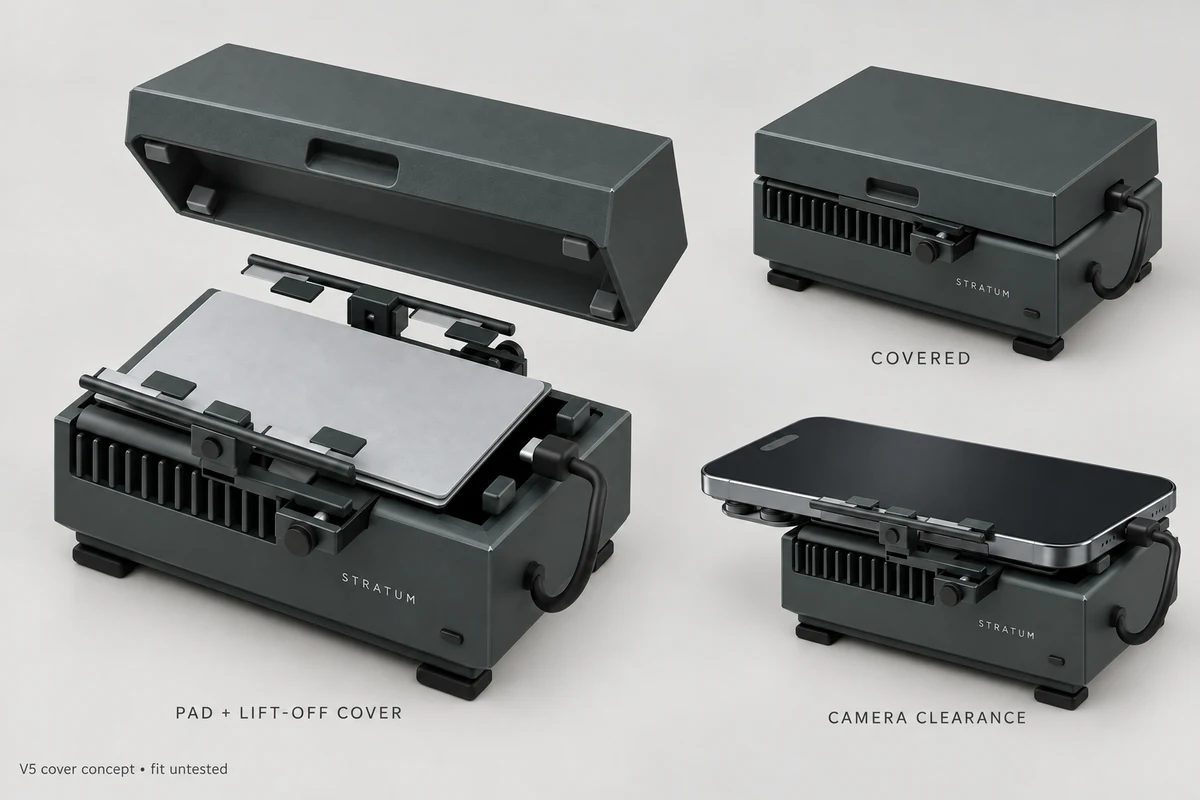
  7. 07
    Visible thermal pad and protective cap
    Visible thermal pad and protective capAI appearance study

    V5 revisit

    Keep the useful parts

    Bring the cover back to the earlier design.

    We returned to the V5 mechanism, made the existing soft thermal pad visible, and added the protective-cover idea. This was not a second thermal pad: the pad had been there all along. The cap came off before docking a phone.

    Added

    A lift-off cover around the earlier contact-cooling design.

  8. 08
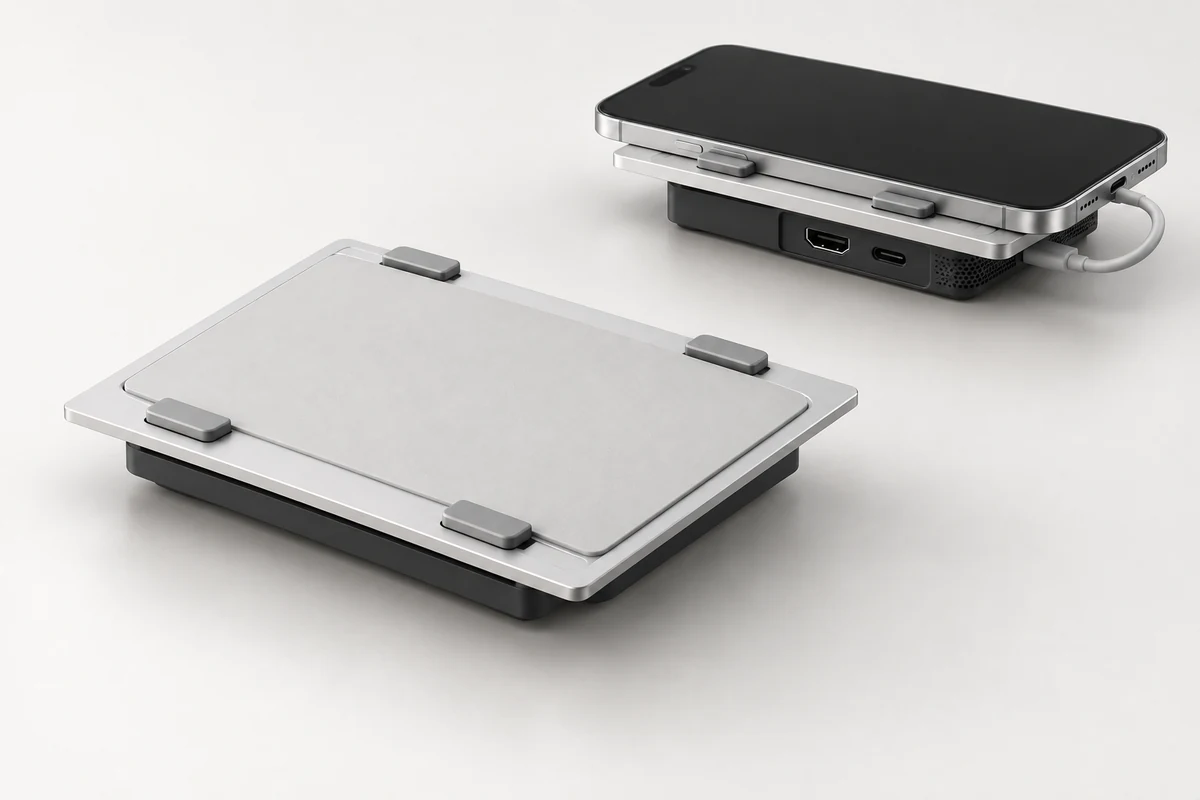
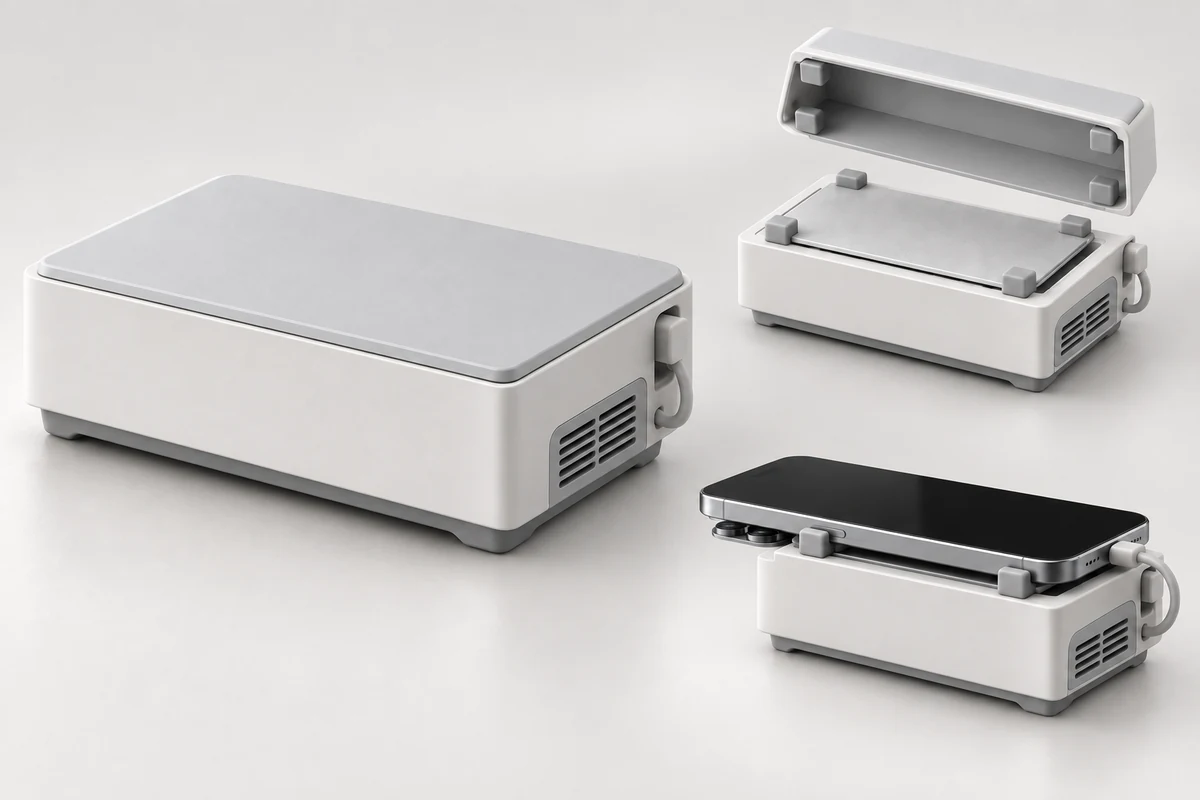
    Warm-white enclosure with gray protective cover
    Warm-white enclosure with gray protective coverAI appearance study

    V7

    A quieter enclosure

    Make it feel at home.

    A continuous warm-white shell replaced the exposed rods, knobs and fins. A gray cover and restrained side vents gave it the feel of a small living-room accessory. Contact cooling remained inside; concealing the mechanism became the next packaging challenge.

    Changed

    The enclosure and finish, while keeping the thermal pad and removable cover.

  9. 09
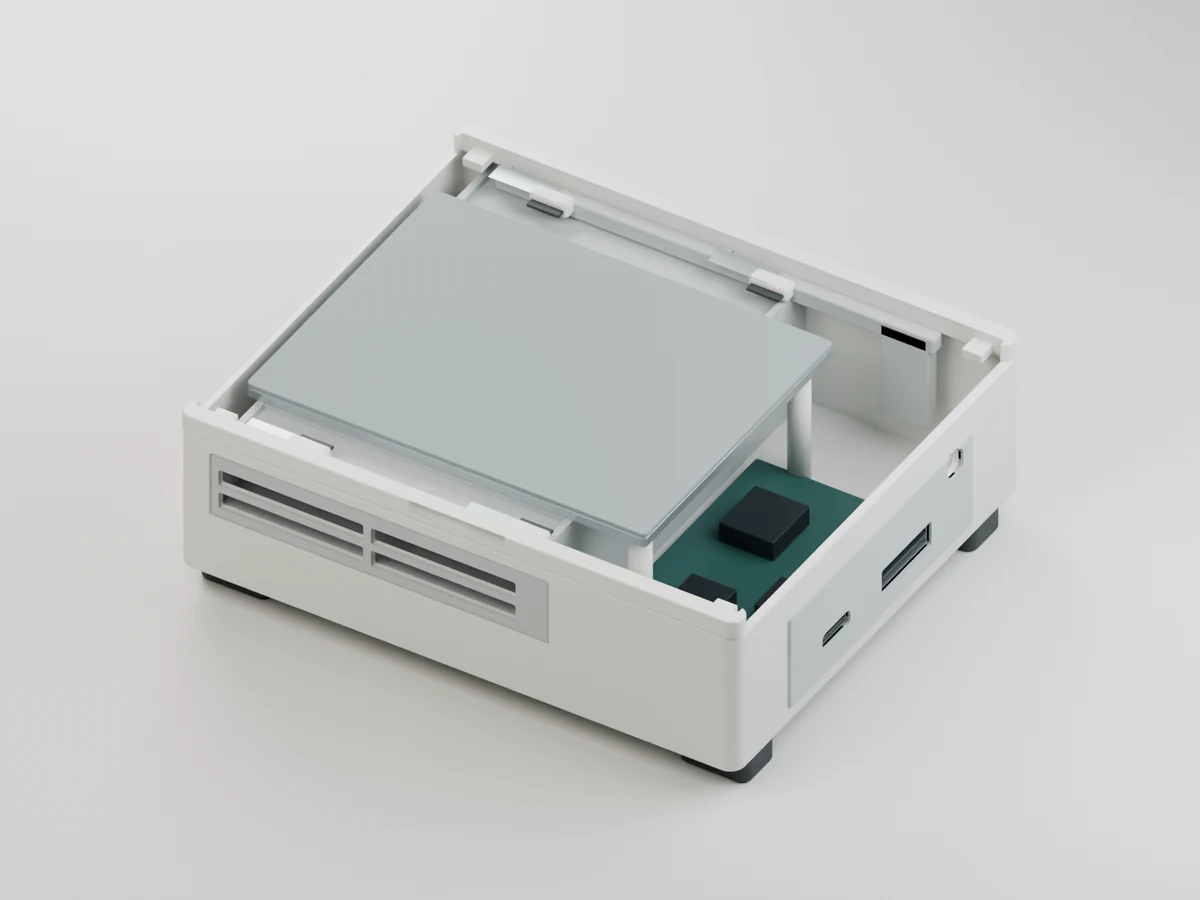
    V8 with the thermal pad exposed
    V8 with the thermal pad exposed3D model render

    V8

    Back to the 3D model

    Fit the hardware inside the picture.

    The quieter enclosure became a dimensioned model. A flush cap covered the parked clamps and an 80 × 62 mm thermal pad. Beneath that were the metal spreader, heatsink and 40 mm fan. A clean outside still contained a tall stack of parts.

    Still inside

    Contact pad → metal spreader → heatsink → fan. The covered body was 33 mm high, before the feet.

  10. 10
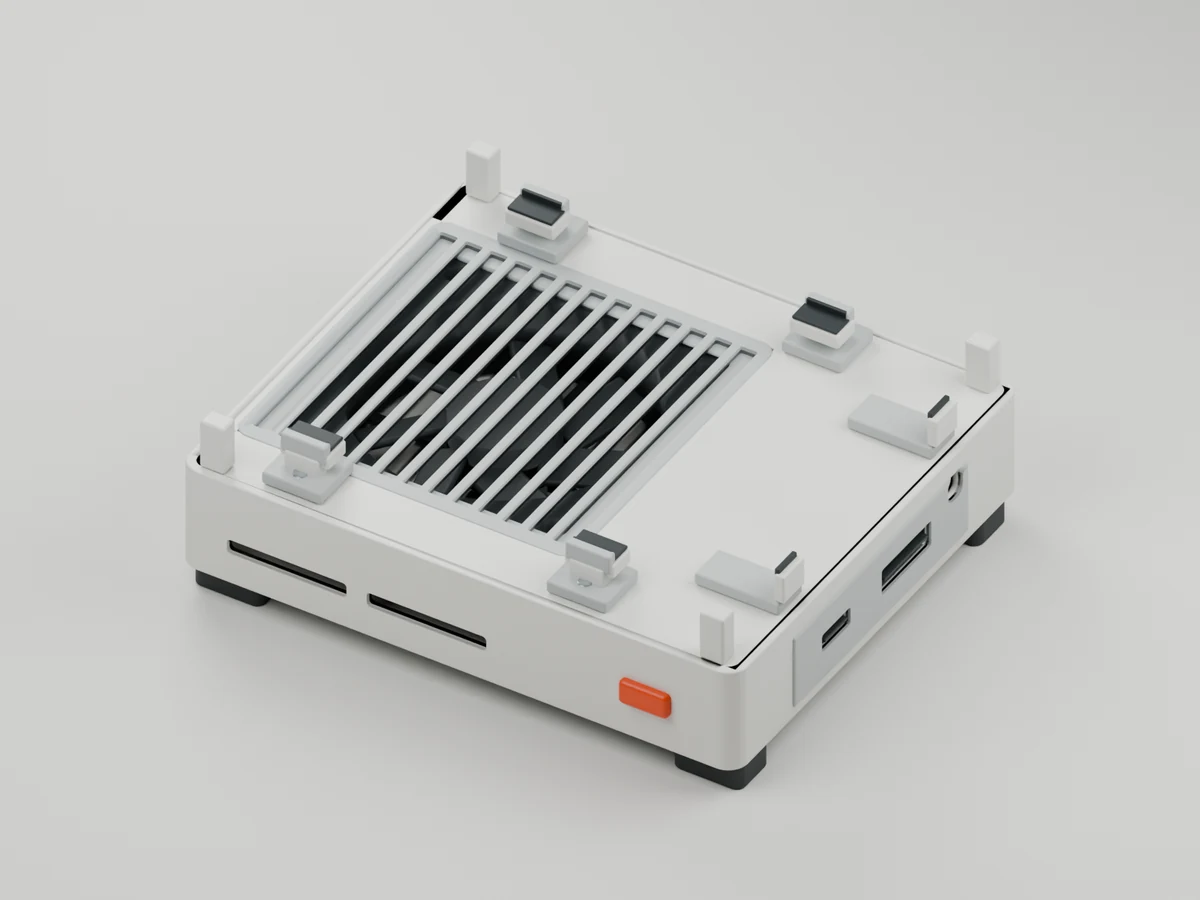
    Open grille replaces the broad thermal pad
    Open grille replaces the broad thermal pad3D model render
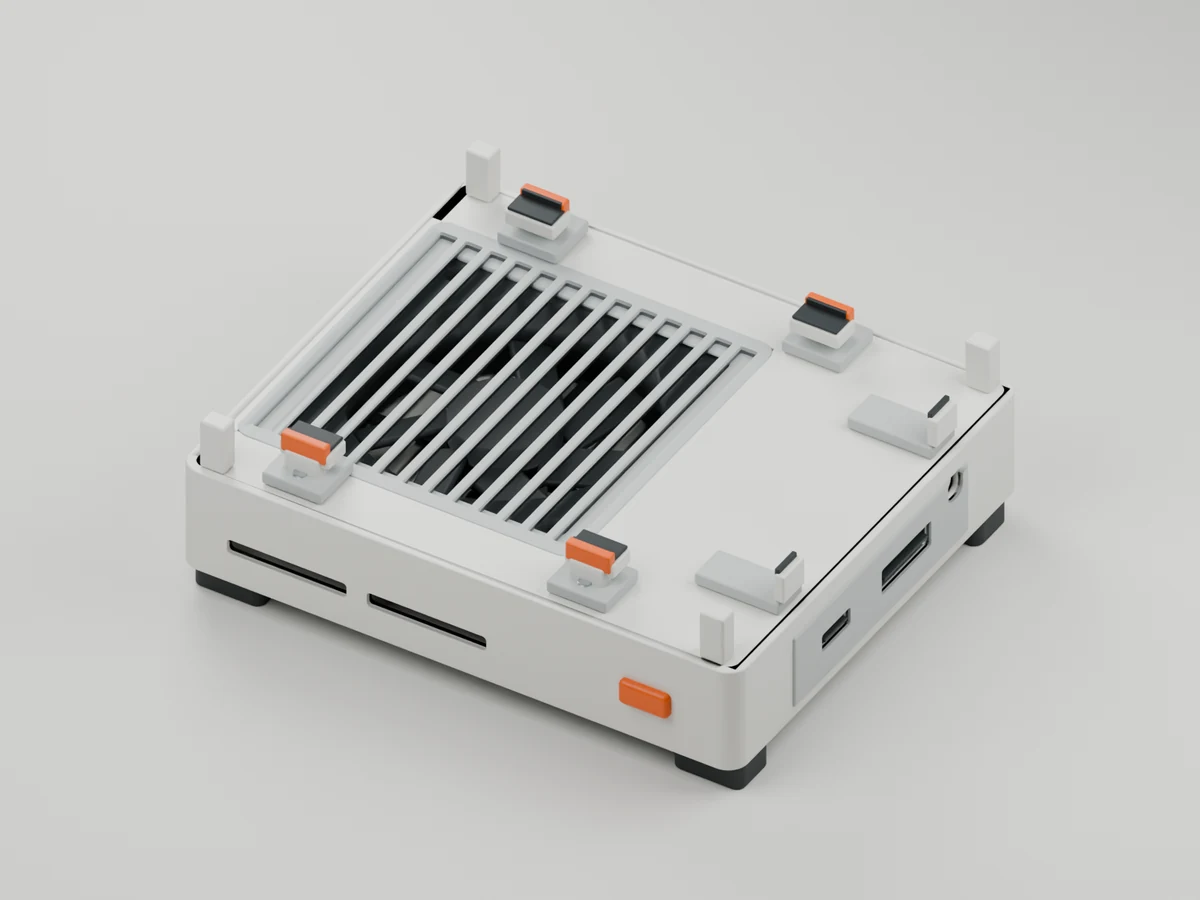
    The same geometry with orange accents
    The same geometry with orange accents3D model render

    V9 AIR

    Major pivot / cooling

    Take the thermal pad out.

    Instead of pressing the phone against a cooling plate, we opened a path to its back. The broad thermal pad, spreader, heatsink and pressure mechanism came out. A larger 60 mm fan replaced the 40 mm fan, with space for air to escape around the phone.

    Removed

    The contact-cooling stack. Small supports still located the phone; the cover and 33 mm closed-body height stayed.

    The orange finish pass changed the accents, not the geometry.

  11. 11
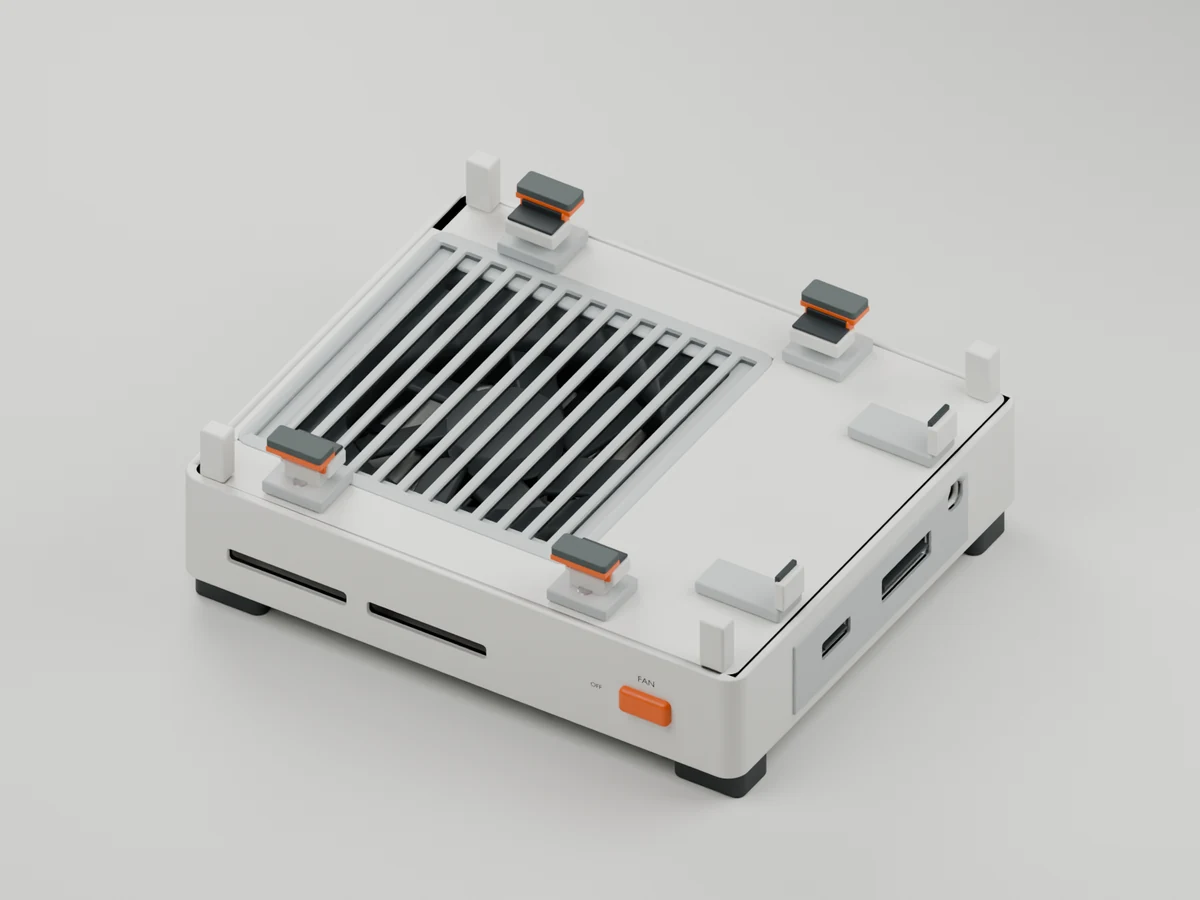
    Cushioned tops added to the existing supports
    Cushioned tops added to the existing supports3D model render

    V9 / PERCH

    Support exploration

    A place for a handheld, too.

    Small silicone cushions on top of the existing supports explored a second use: resting a larger handheld with the dock fan off. The cushions needed room under the lid, so this branch actually made the cover 2 mm taller.

    Tradeoff

    Softer handheld rests, but a taller cap. Real device fit remained a test.

  12. 12
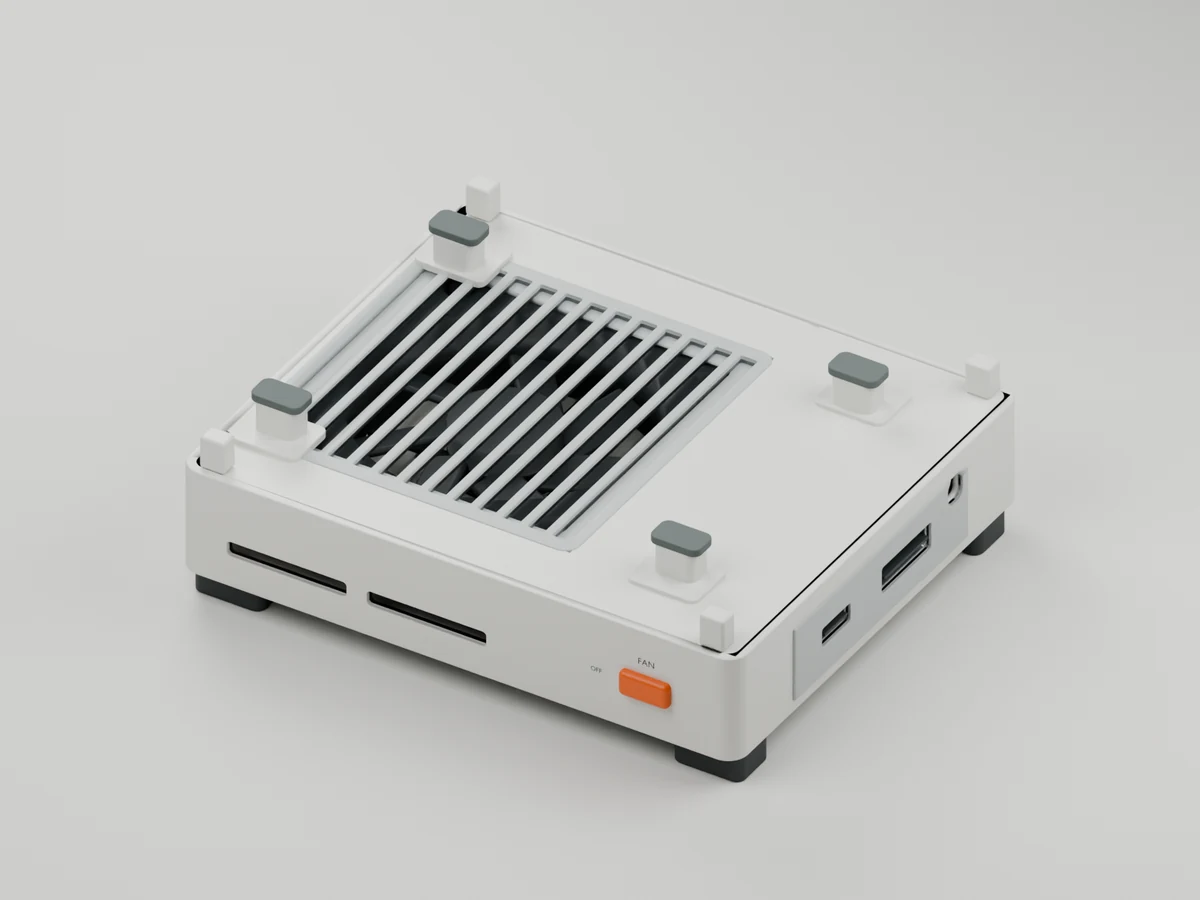
    Four fixed rests replace the adjustable supports
    Four fixed rests replace the adjustable supports3D model render

    V9 / REST AIR

    Major pivot / supports

    Lose the clamps.

    Direct airflow no longer needed pressure against a thermal pad. Four fixed, silicone-topped rests replaced the side jaws, sliders and stops. Set the phone down, connect the cable, and leave its back exposed above the grille.

    Removed

    The adjustment mechanism. The 8 mm starting air gap and lift-off cover remained.

  13. 13
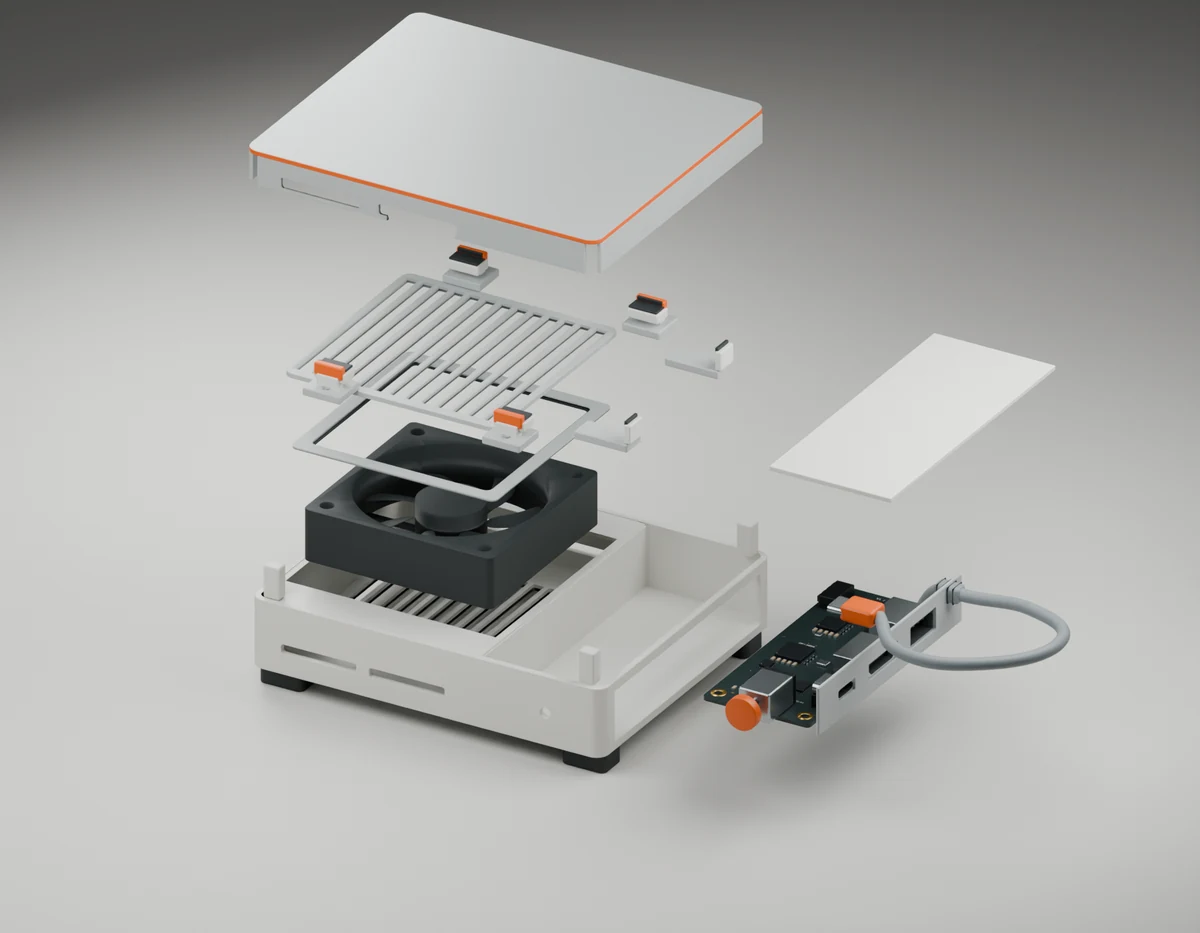
    Native exploded guide to the V9 components
    Native exploded guide to the V9 components3D model render

    V9 / INTERNALS

    Parallel internals study

    Give the components a place.

    This parallel study kept the earlier adjustable supports and added an accessory connection back into the design, this time as USB-A. A proposed board sat beside the fan, and the orange control became a circular speed dial with a fan-only OFF position.

    Developed

    A proposed 34 × 76 mm board layout and serviceable parts. Its board layout and control carried into the later open-top revision; the circuit still needed engineering.

  14. 14
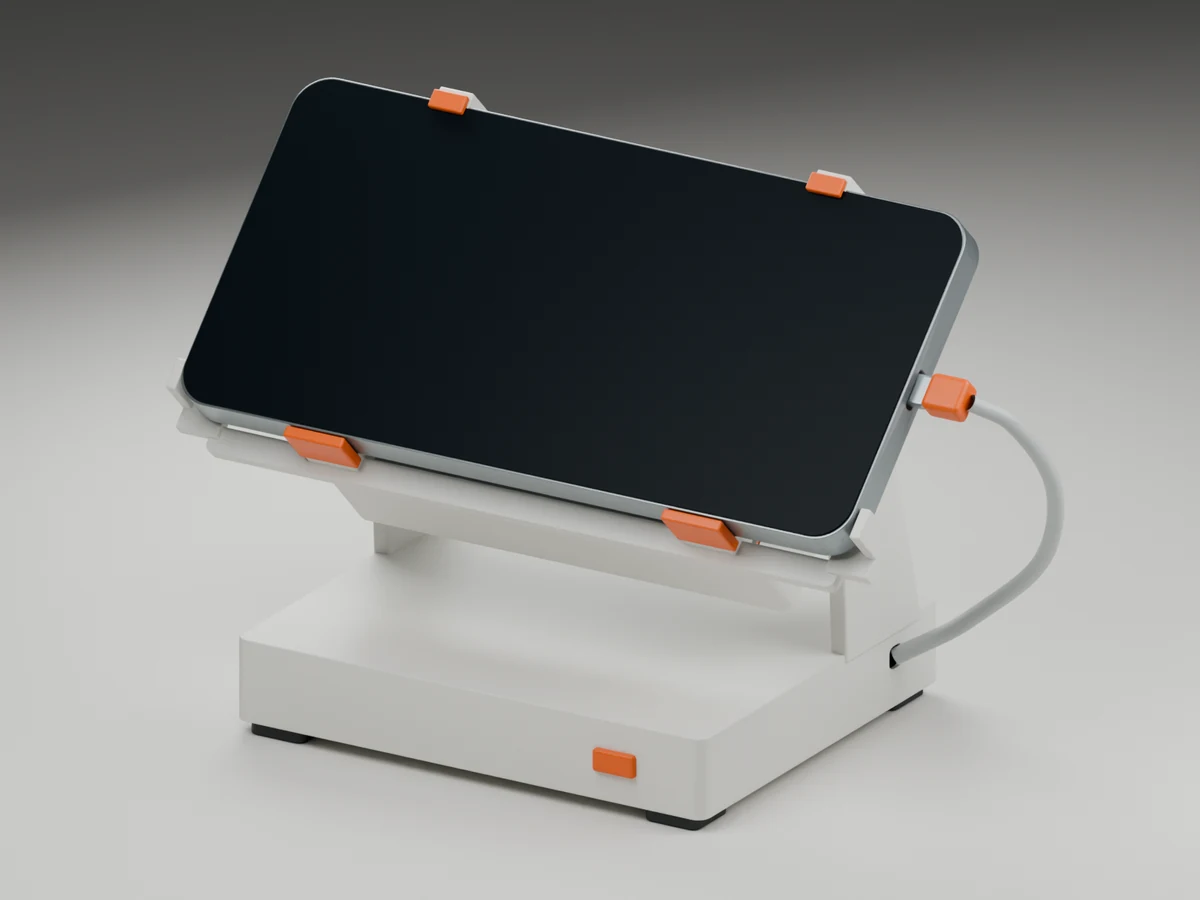
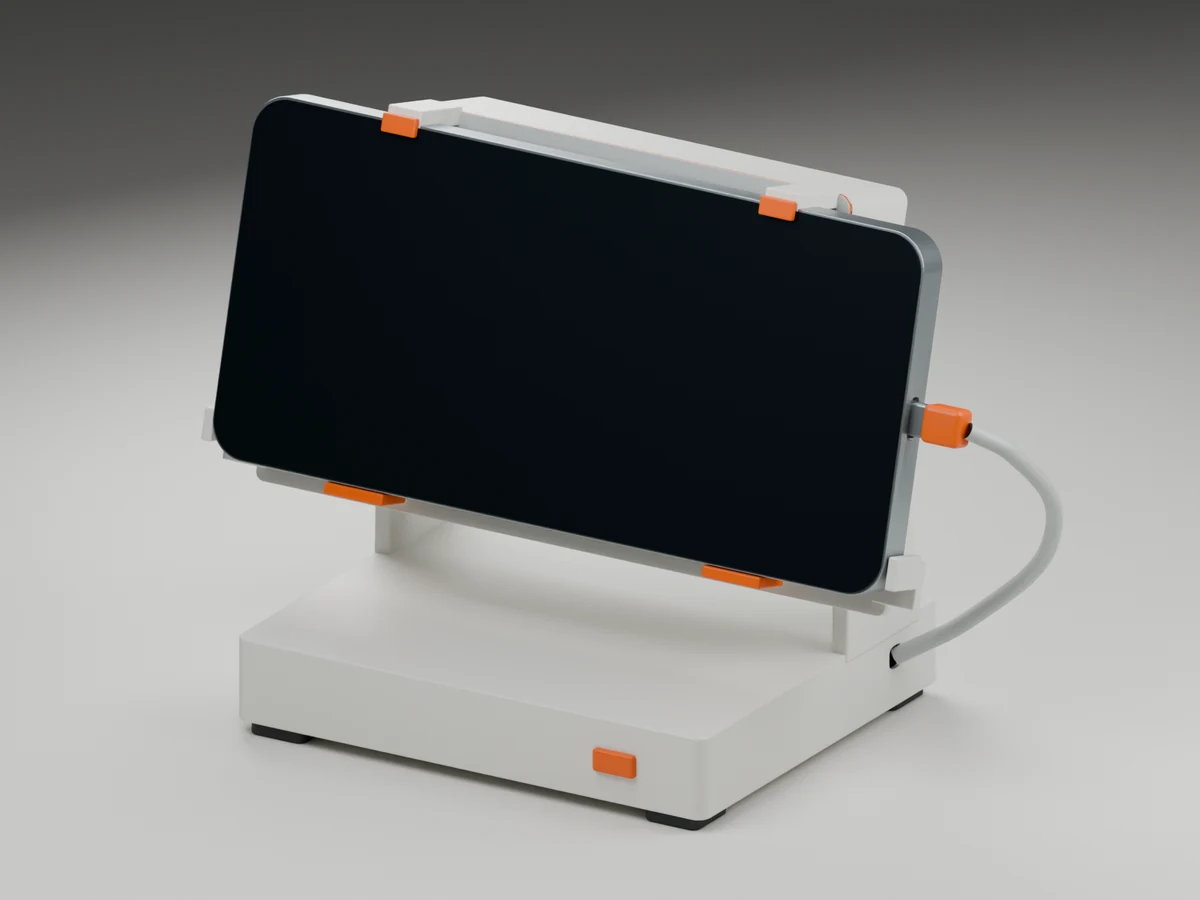
    45° landscape stand
    45° landscape stand3D model render
    75° landscape stand
    75° landscape stand3D model render

    ORIENTATION STUDY

    Alternate direction / not selected

    What if the phone stood up again?

    Two landscape studies tried 45° and 75° for viewing and touch use. The fan tilted with the phone to keep the cooling gap consistent. Both added height and support hardware. The eventual direction returned to the horizontal V9 design.

    Explored

    Two viewing angles explored alongside the horizontal design.

  15. 15
    Open-top revision with lower phone rests
    Open-top revision with lower phone rests3D model render

    V9 / REVISED

    Major pivot / cover & height

    Lose the lid. Lower the phone.

    The storage cover went away completely. Shorter padded rests brought the phone closer to the grille, and a removable guard kept the fan accessible for cleaning. The dock became a place to set a phone, with fewer parts to move or put aside.

    Reduced

    A 21.5 mm main enclosure and a 5.3 mm unloaded phone-to-grille gap; 5 mm loaded remained a test target.

  16. 16
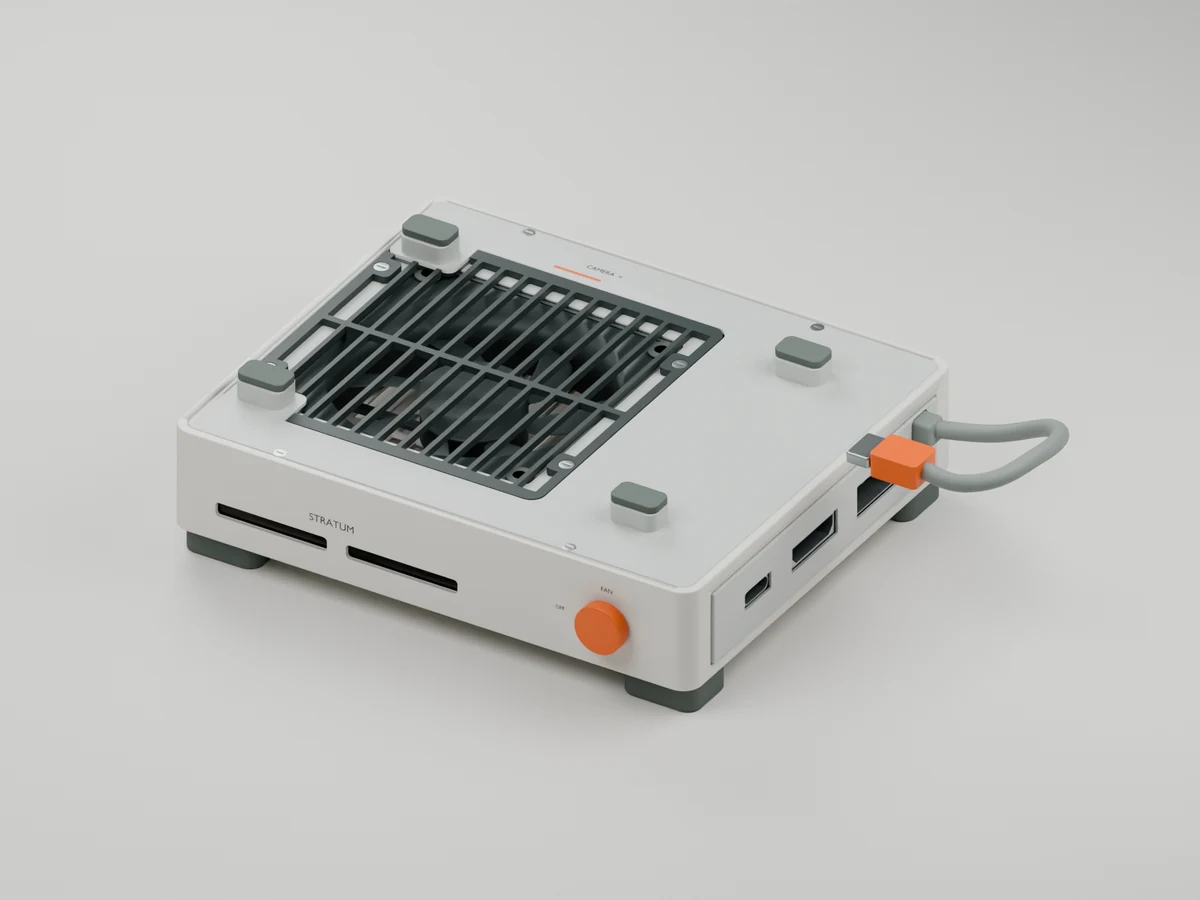
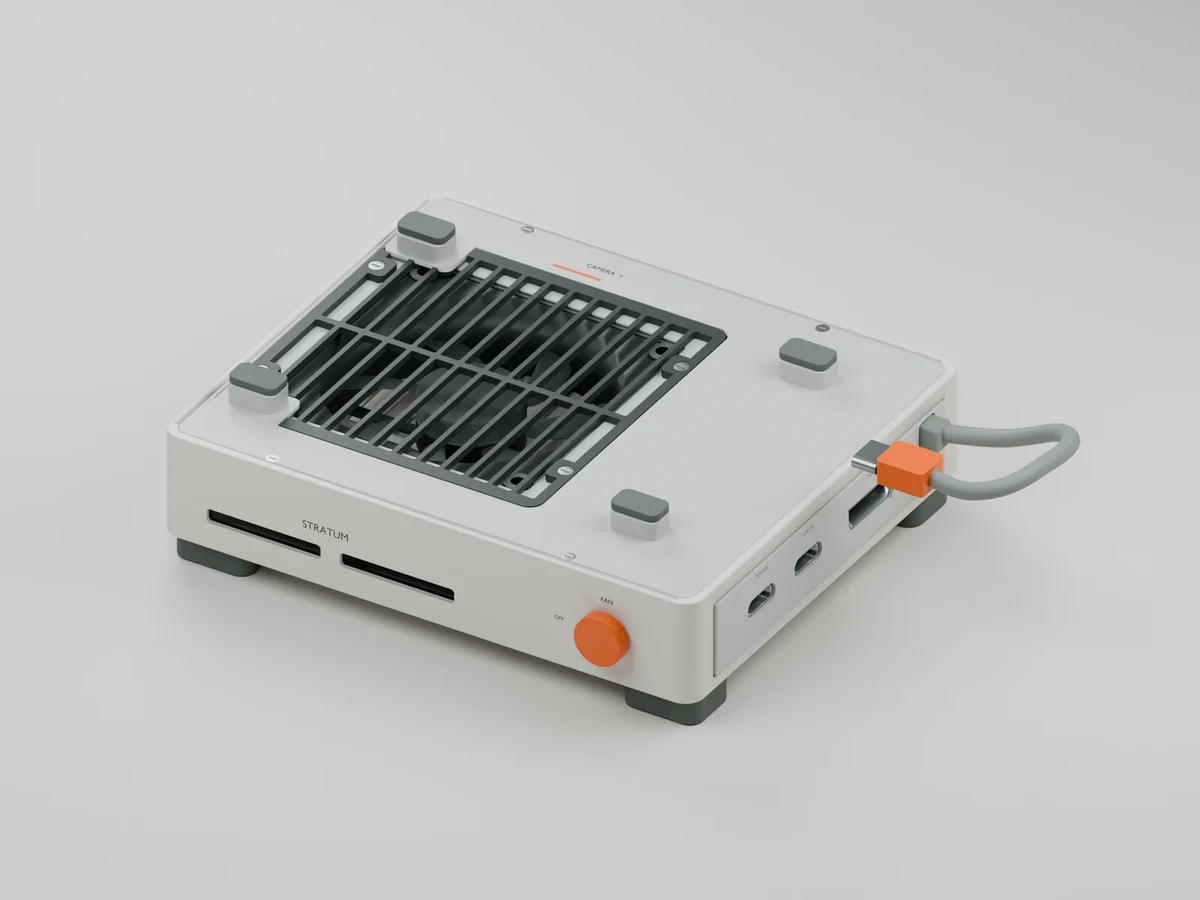
    The final Stratum-branded dock before the change to Dockade, with the same open top, low rests and orange control.
    V10 / Stratum, before the rebrand3D model render

    V10 / Stratum

    Before the rebrand

    The last version called Stratum.

    The low, open-top design had taken shape. USB-C POWER, USB-C DATA and HDMI sat together beside the attached phone lead. This was the design we carried forward when Stratum became Dockade.

    Design carried forward

    A 112 × 94 mm body, four low phone rests and an orange fan dial. The next step was the name and branding.

  17. 17
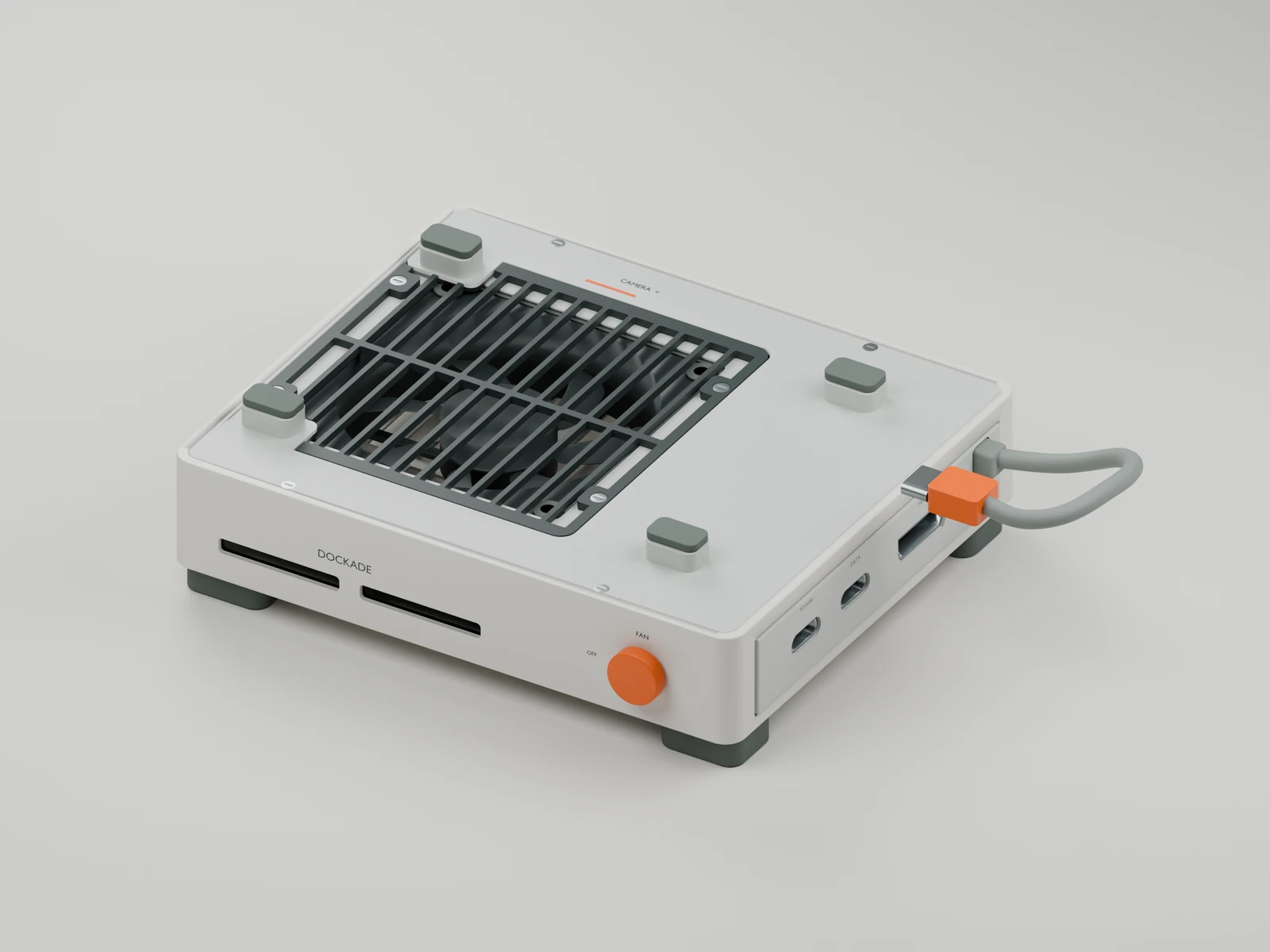
    Current Dockade V11 design
    Current Dockade V11 design3D model render

    V11 / Dockade

    New name & branding

    Stratum becomes Dockade.

    The change from V10 to V11 was the name and branding: Stratum became Dockade. The dock kept the same shape, open grille, four low rests and orange fan dial. The new Dockade wordmark brought the product and website under the same name.

    Changed

    Stratum → Dockade. New name and branding, with the hardware design carried forward.

    Explore the current design
THE NEXT ITERATION NEEDS A REAL OBJECT

AI made it possible to explore and revise quickly. The next step is to build, measure and refine: real phone fit, cooling, noise and electronics still need physical testing.

See what we’re testing next