INSIDE THE DESIGN / V11 / SEPTEMBER 2026
Less to adjust.
More room to play.
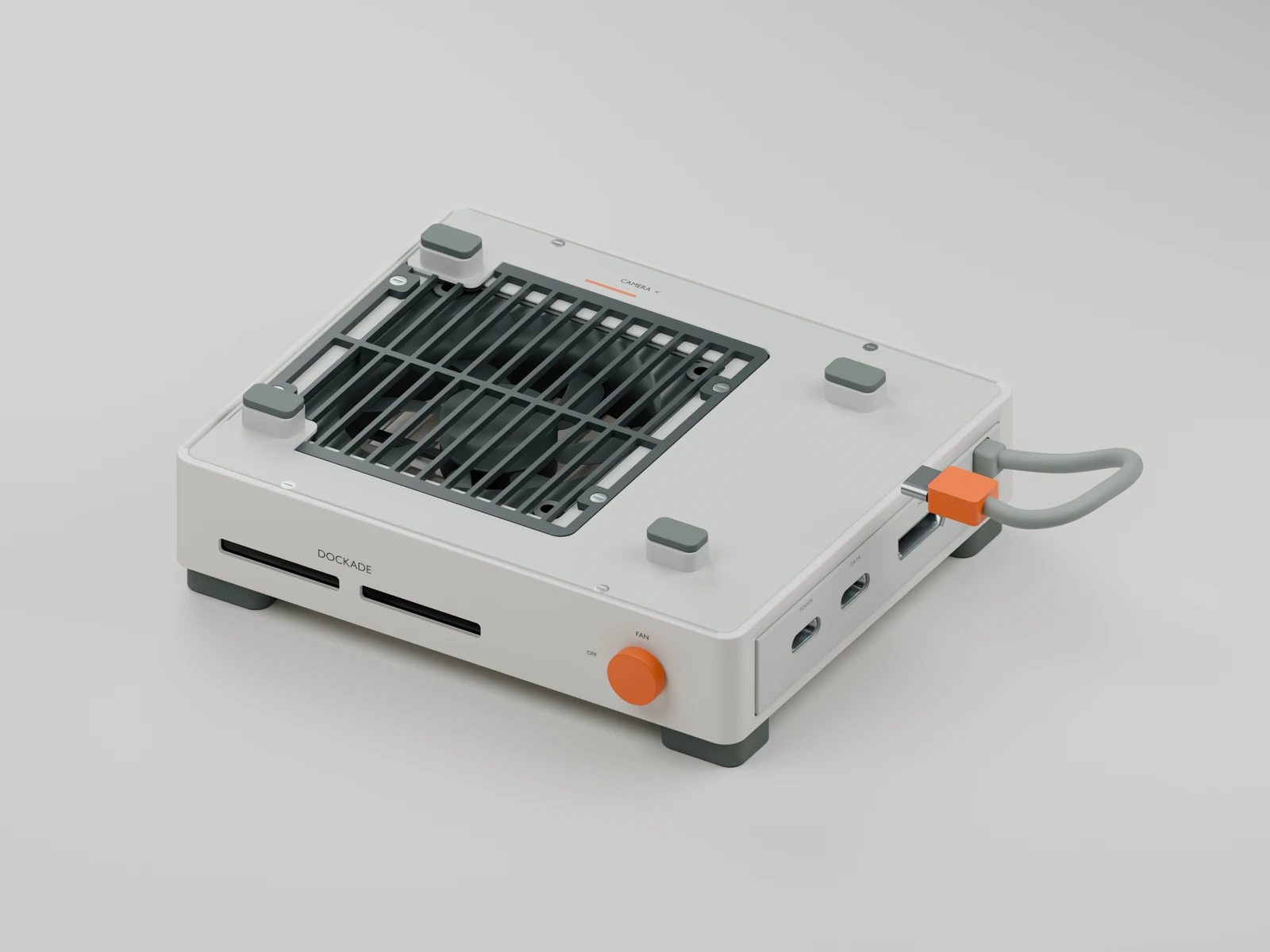
Set the phone on four low soft rests and connect the attached USB-C lead. V11 brings an open grille, one cooling fan and the TV connections together in a compact dock. There’s no cover to remove and no clamp to adjust.
Back to the dock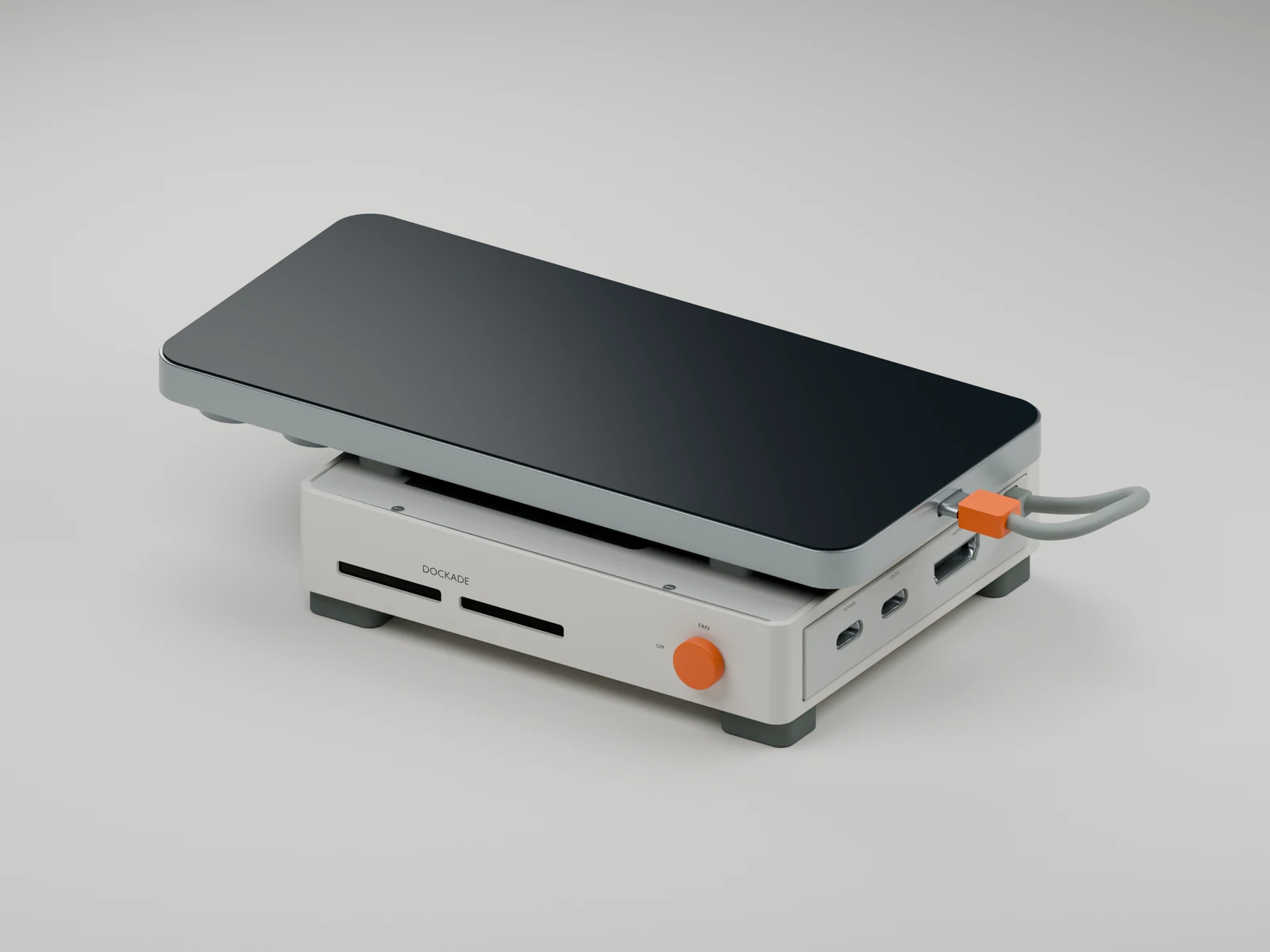
01 / A SIMPLER PLACE TO LAND
Support the phone.
Leave its back open.
A thermal contact pad needs a reliable joint against the phone. Direct airflow lets us remove that broad pad, metal spreader and pressure mechanism. Four small silicone contacts support the device while leaving its rear exposed.
V11 keeps the revised grille and low rests from the latest native design. The contacts are fixed: there are no sliders, side jaws or end stops. A slack, flexible cable connects the phone without supporting its weight. Actual camera clearance, pad grip and stable placement still need tests with each supported device.
02 / THE AIR PATH
One fan.
An open path.
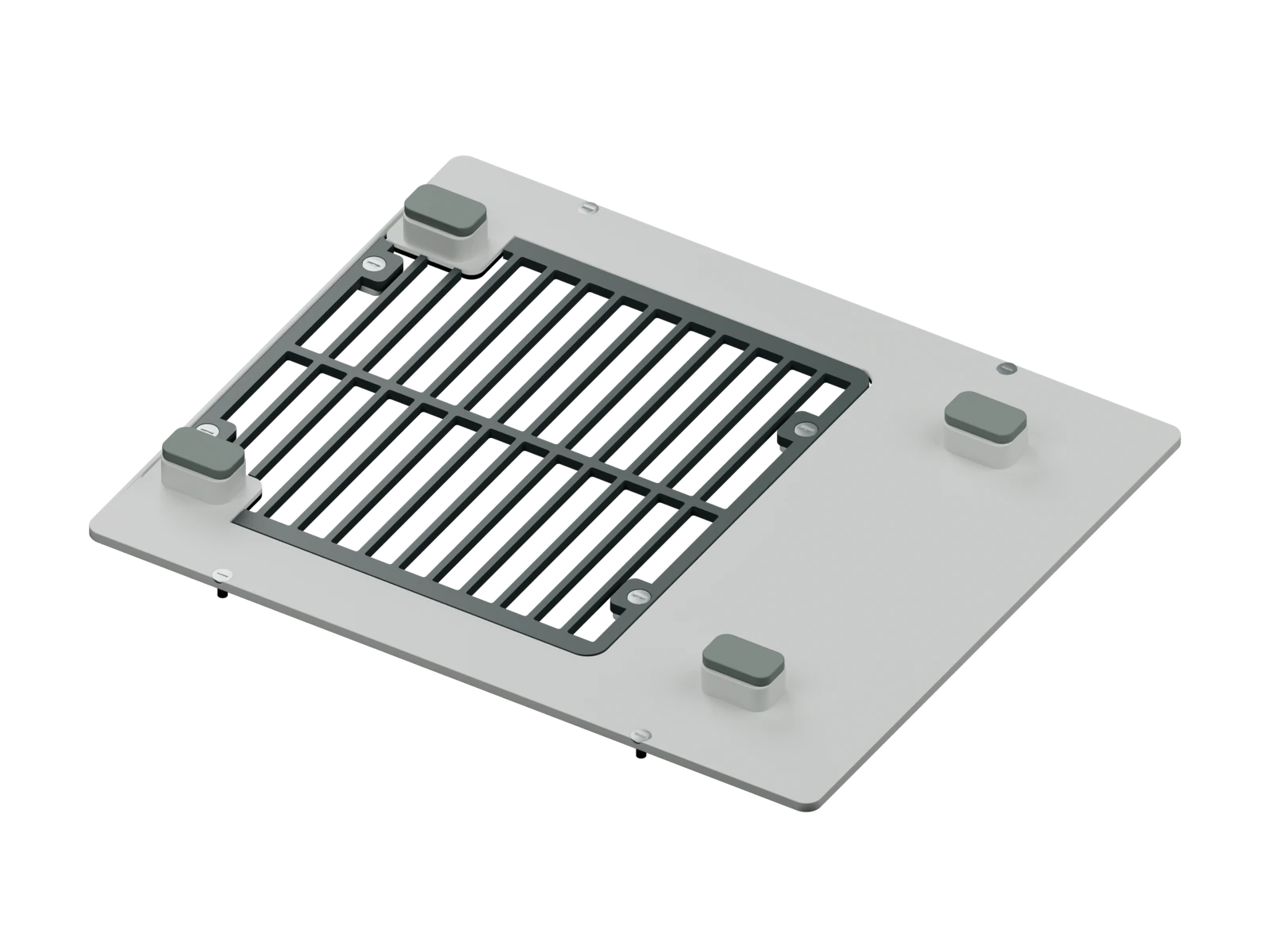
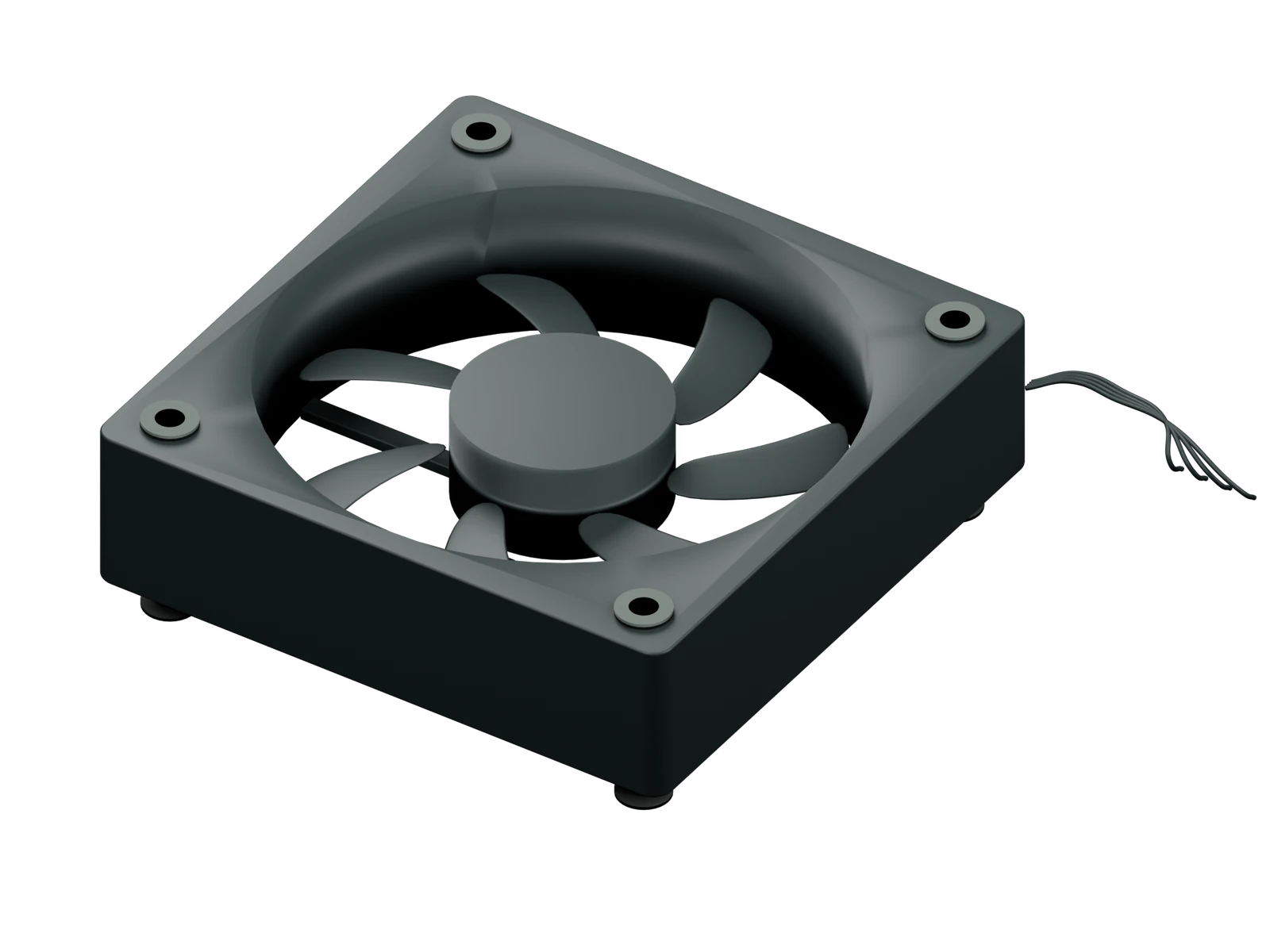
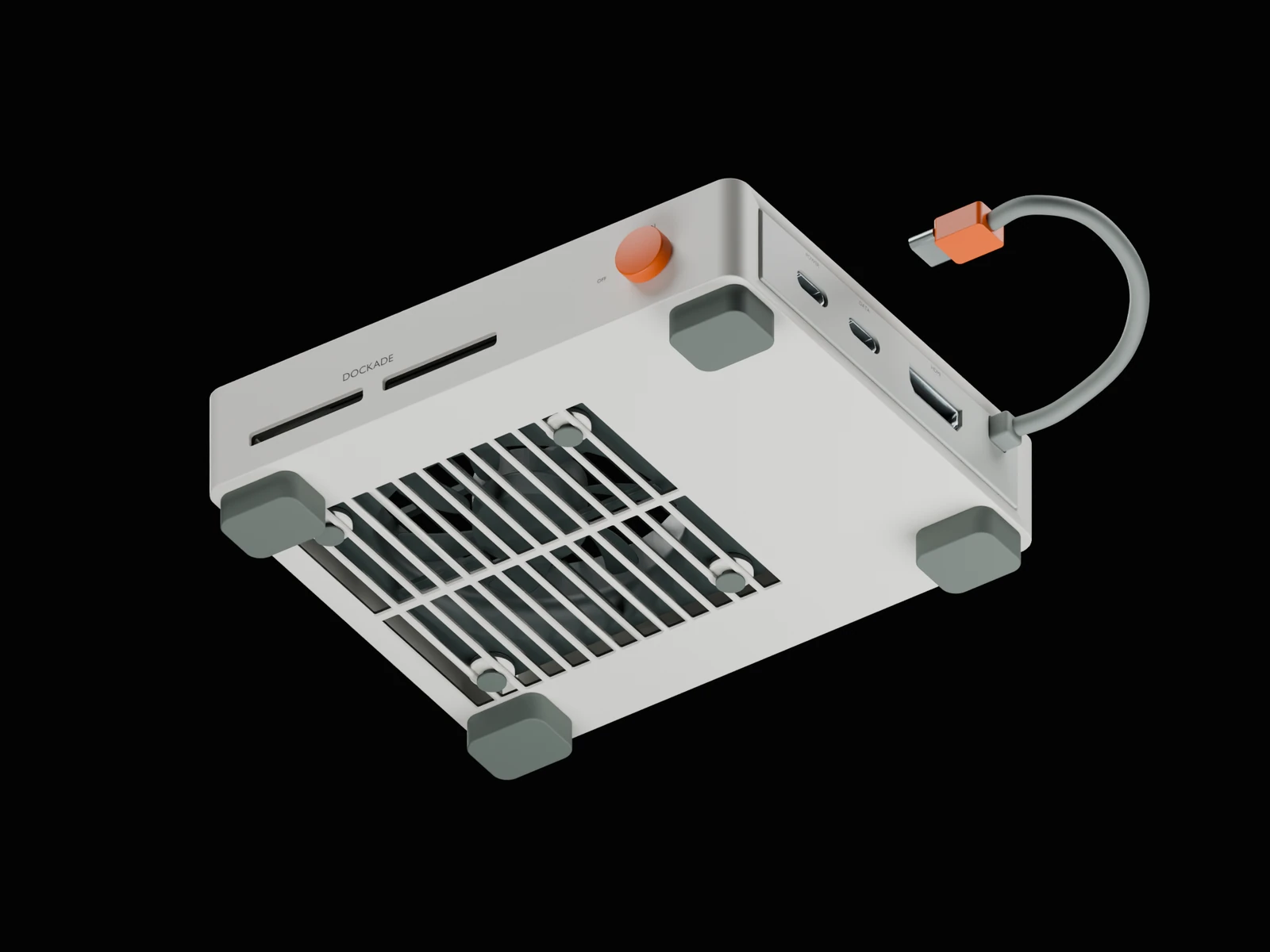
A single 60 mm fan draws room air through the underside intake and directs it toward the phone’s back. The open perimeter gives that air an exit. A divider and opaque deck separate the electronics bay from the fan path.
The model has a 5.3 mm unloaded gap between the grille and the phone’s flat rear. A 5.0 mm loaded gap is the test target, allowing for proposed pad compression. Neither the compression nor the cooling benefit has been physically measured.
The orange dial adjusts fan speed and includes a fan-only OFF position. Switching cooling off is intended to leave HDMI, charging and the accessory connection operating. This behavior remains an electrical requirement to verify on the prototype.
03 / SMALL, FROM THE INSIDE OUT
A lower profile.
Fewer parts.
The body footprint is 112 × 94 mm. The rigid dock stands 32.8 mm high, including its feet and unloaded phone pads. The phone, flexible lead and projecting controls are separate from those body dimensions.
A warm white enclosure surrounds a neutral gray deck and graphite grille. Orange marks the fan control and host plug. The material direction is PC/ABS for the hard parts, silicone for the soft contacts and isolation, and a shielded flexible host cable. Final grades and manufacturing details remain open.
The removable deck and grille provide service access to the fan and electronics. The storage lid is no longer part of the design.
04 / THREE SOCKETS. CLEAR ROLES.
Power. Data.
HDMI.
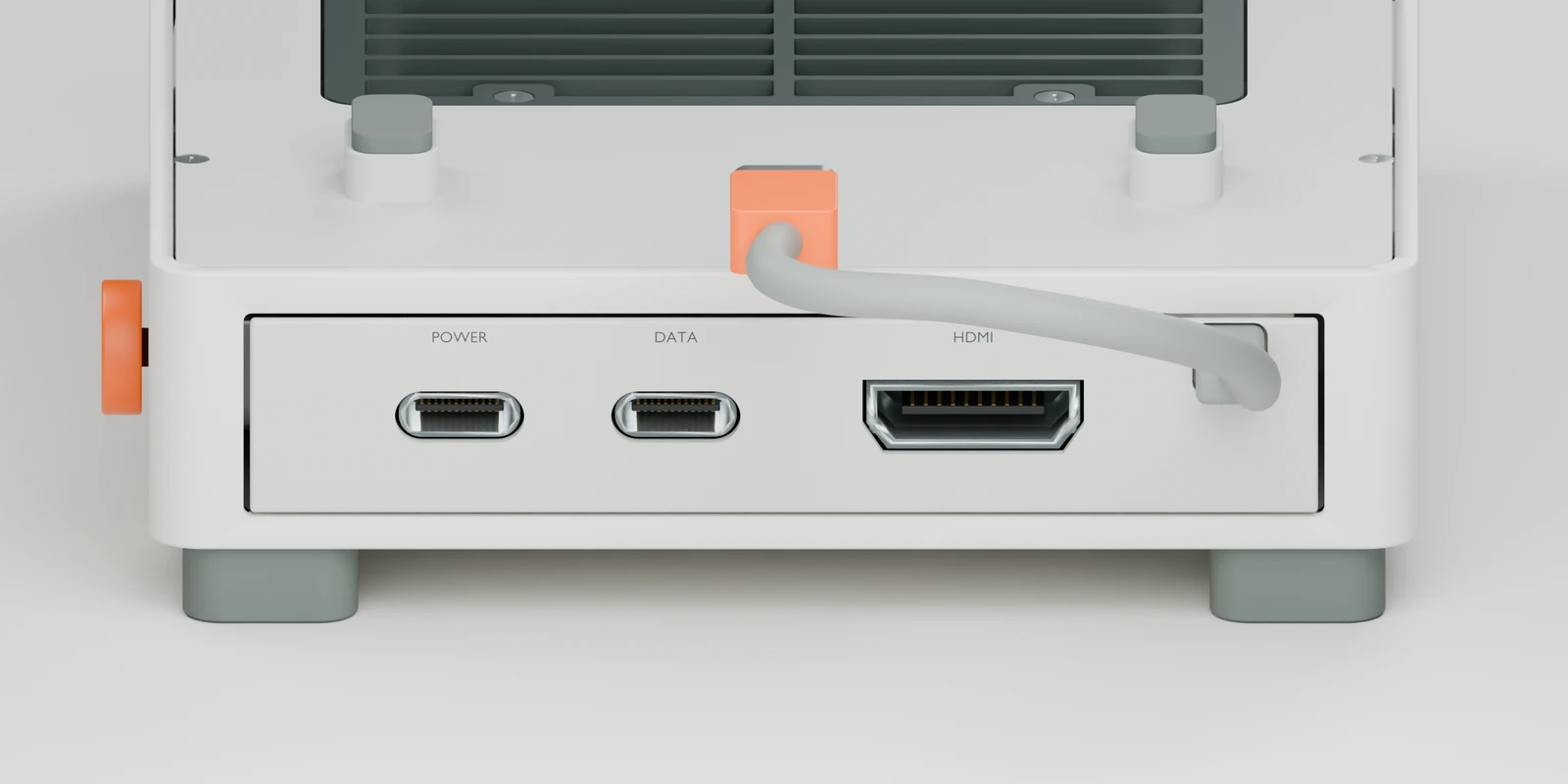
The two USB-C sockets sit next to each other, followed by HDMI. They have distinct jobs:
- POWER: the sole USB-C charger input.
- DATA: a USB-C accessory connection for a compatible controller, receiver or other peripheral. It is not another charger input.
- HDMI: picture and sound to the display.
A separate attached USB-C lead connects the phone or supported host. USB-A accessories would need a suitable adapter; accessory support depends on the host and software. The dock does not make unsupported phones capable of wired video output.
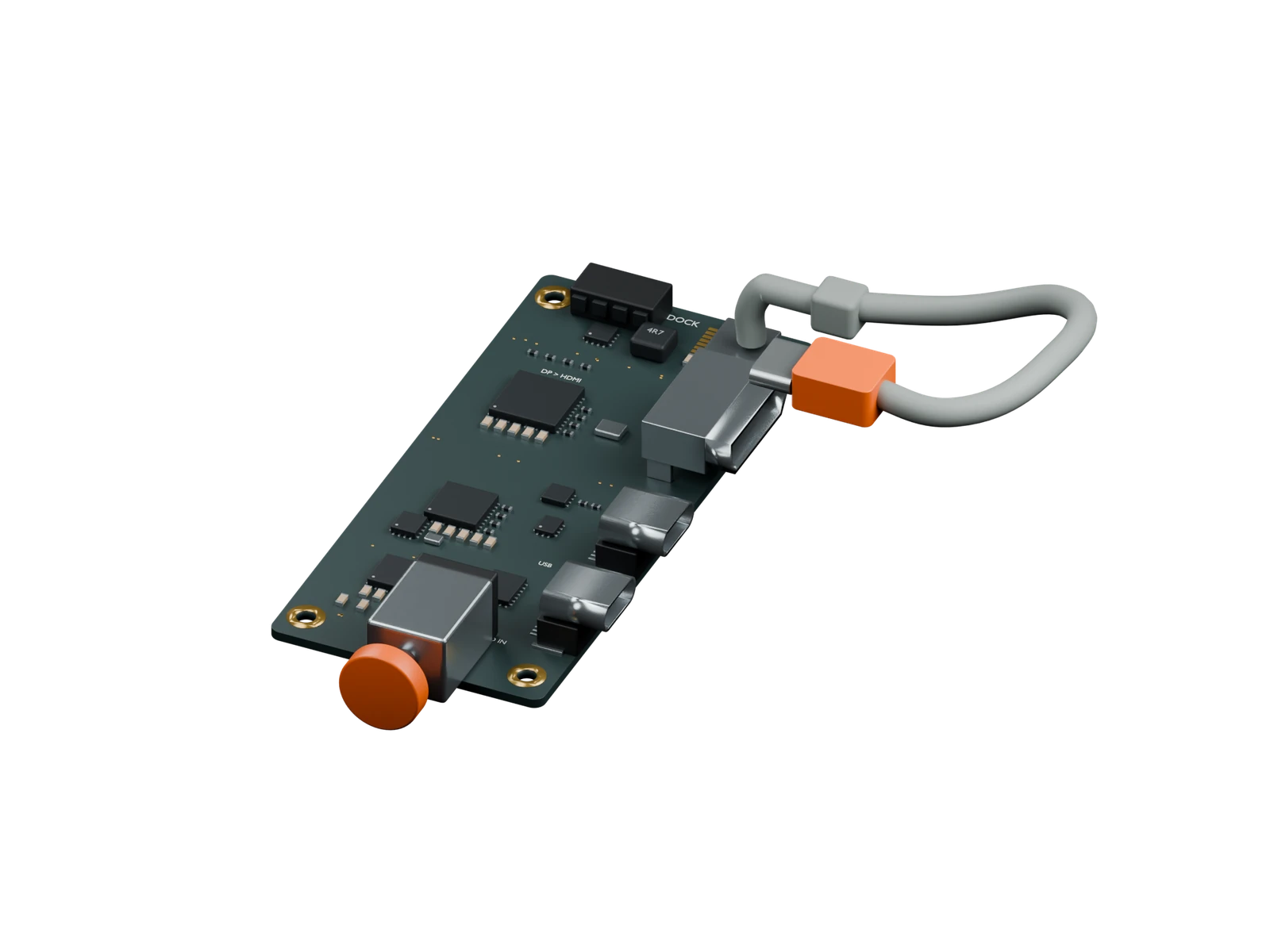
The proposed 34 × 76 mm PCB places power delivery, video conversion, accessory protection and fan control alongside the fan. It is a populated layout concept, not a routed or electrically qualified board. 1080p60 is the initial display test baseline; higher modes and exact device compatibility need separate verification.
05 / ONE MODEL, THROUGHOUT
The parts
fit the picture.
Every product and component image on this page comes from the same V11 Blender scene. The saved design carries the revised grille, lower rests, fan stack, cable restraint and updated USB-C interfaces together.
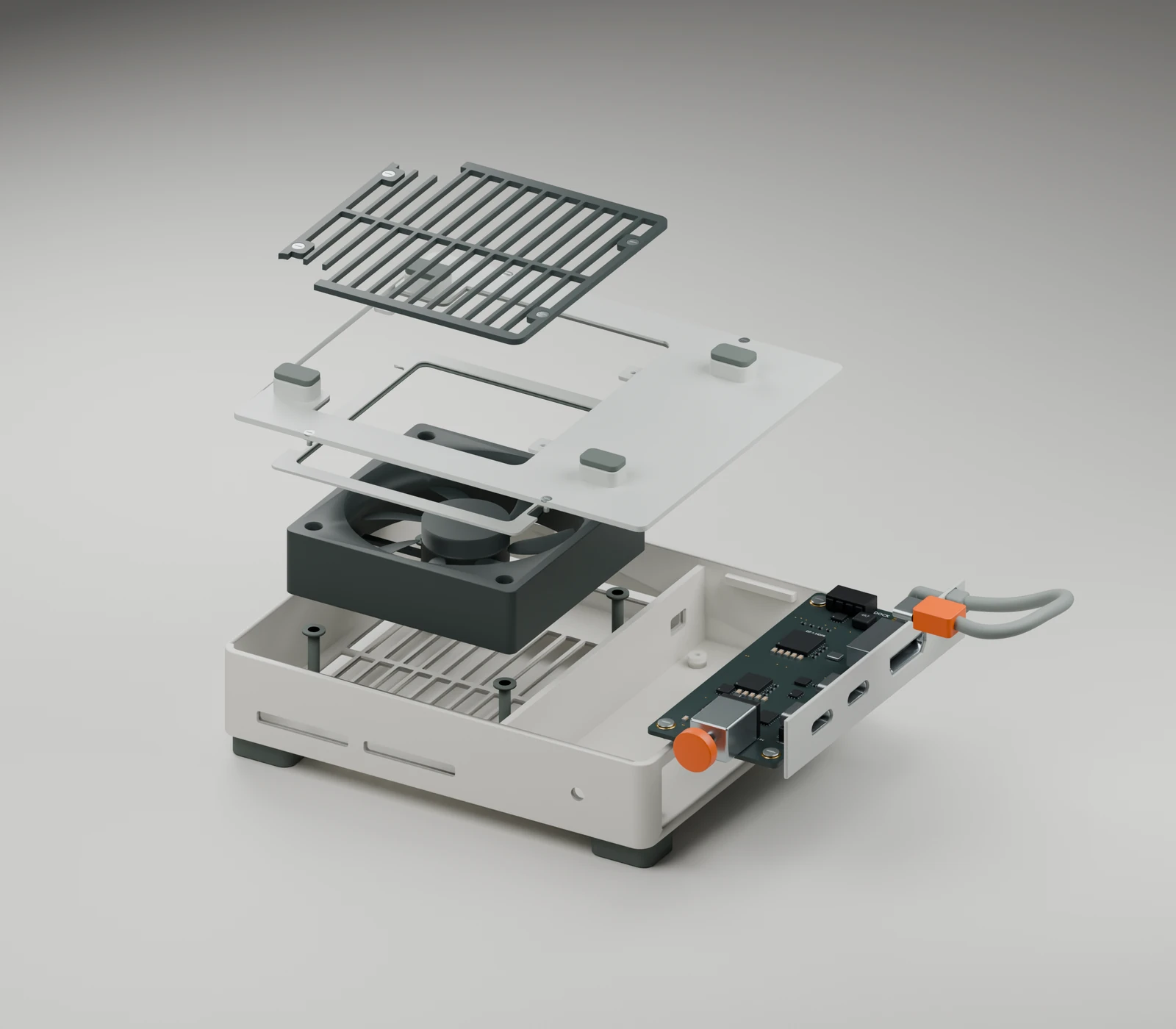
The saved model passed scoped geometry checks for its dimensions, selected interferences and key parts. These checks do not establish manufacturing tolerances, cooling performance or electrical compatibility.
The fan, grille, board and exploded assembly shown here are concept studies of the same V11 design.
06 / WHY MOBILE GAMING, WHY COOLING
Games have grown.
Phones still have limits.
Selected iPhones already run native console releases, including Assassin’s Creed Mirage. Flagship Galaxy phones also target demanding mobile games. Game catalogs and device requirements differ between iOS and Android.
Mainstream iPhone and Galaxy S models use internal heat-spreading systems without cooling fans. Vapor chambers move heat within the phone; they do not actively blow air over it. By comparison, Steam Deck uses an internal fan, as do Nintendo Switch consoles.
Apple notes that excessive heat can cause lower frame rates and increased processing times. Dockade is designed to add airflow across the phone’s exposed back during TV play and charging. That is a design intent, not a measured reduction in throttling.
4K60 output is not a game benchmark.
Apple documents up to 4K at 60 Hz HDMI output with a compatible adapter on supported iPhones. A display signal does not tell us the game’s internal rendering resolution or sustained frame rate. We are not claiming native AAA games at 4K60 on every phone, or a validated 4K60 mode for this dock. The initial Dockade prototype baseline remains 1080p60.
Samsung’s Galaxy S26 announcement describes its vapor-chamber cooling and graphics hardware; it does not establish the same native console-game catalog as iPhone.
07 / WHAT WE TEST NEXT
Build it.
Measure it.
No physical Dockade performance result exists yet. The next step is a working prototype: check real phone fit and cable reach, measure airflow and noise, then run repeatable games with HDMI and charging active.
- Compare fan-off and fan-on runs at the same game settings, power conditions and room temperature.
- Record sustained frame times, device temperatures, battery trend and sound. A cooler outside surface alone does not prove more FPS.
- Test pad compression and grip, grille strength, cable restraint and connector access.
- Verify video, audio, charging and accessories on each intended device, including fan-OFF operation under load.
Supported handhelds may use the dock with its fan off, but rear buttons, vents, grip shapes, power requirements and TV compatibility must be checked separately. No universal-device promise follows from the shared USB-C connector.
Help shape what’s next